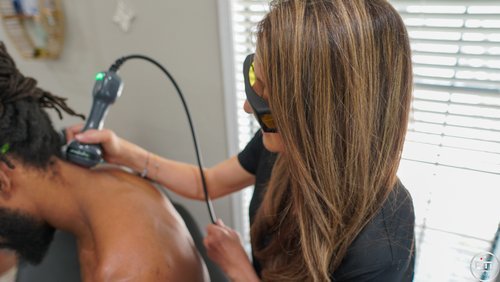
Class IV, Deep Tissue
Laser Therapy
The most innovative and non-invasive medical grade light therapy on the market
for treating acute tissue injuries.
How It Supports Acute Injuries — and Why We Pair It With Shockwave for Chronic Pain
Class IV Deep Tissue Laser Therapy is a core modality at Impact Laser Mobility & Recovery, especially for acute injuries, recent flare-ups, and early-stage pain. It is also an important recovery tool we use alongside focused shockwave therapy when pain has become chronic.
This page explains what laser therapy does, how it feels, and how we use it differently depending on whether an issue is acute or long-standing.
What Is Class IV Deep Tissue Laser Therapy?
Class IV laser therapy uses specific wavelengths of light to deliver photobiomodulation to tissue beneath the skin. This light energy is absorbed by cells and supports the body’s natural healing processes at a cellular level.
In simple terms, laser therapy helps:
support cellular energy (ATP) production
improve circulation and oxygen delivery
calm irritated tissue
reduce pain signaling
Class IV lasers deliver therapeutic energy deep into muscle, tendon, and joint tissue safely and efficiently.
When We Use Laser Therapy for Acute Injuries
Laser therapy is often our first-line tool for acute and subacute conditions.
We commonly use laser alone for:
recent muscle strains or pulls
joint irritation or inflammation
early tendon pain
post-workout or post-activity flare-ups
acute neck, back, shoulder, knee, or foot pain
In these cases, the goal is to:
calm inflammation
support tissue recovery
reduce pain quickly
help you return to normal movement sooner
Laser therapy is gentle, comfortable, and well suited for tissue that is irritated but still actively healing.
What Laser Therapy Is Not
Laser therapy is often misunderstood. It is not:
electrical stimulation
injections or medication
surgery or invasive treatment
heat therapy (though mild warmth may be felt)
Laser therapy is a light-based cellular support tool designed to enhance the body’s existing recovery capacity.
Why Laser Alone Is Sometimes Not Enough for Chronic Pain
When pain has been present for weeks or months, the issue often goes beyond irritation.
Chronic pain frequently involves:
slowed or stalled tissue recovery
reduced circulation
tendon or soft-tissue overload
altered pain signaling
In these cases, calming tissue alone is often not sufficient. The tissue may also need targeted mechanical stimulation to respond differently.
That’s where shockwave comes in.
How Laser and Shockwave Work Together for Chronic Conditions
For chronic pain, we often combine:
Focused Shockwave Therapy to mechanically stimulate stubborn tissue and circulation
Class IV Laser Therapy to support cellular energy, blood flow, and recovery
Think of it this way:
Shockwave helps stimulate the tissue
Laser helps the tissue recover and adapt
Together, they address both sides of chronic pain more effectively than either tool alone.
This combined approach is why laser is included in our chronic recovery programs, not just acute care.
What Does Laser Therapy Feel Like?
Laser therapy is generally described as:
comfortable
relaxing
warm but not hot
There is no sharp or painful sensation, and many clients find sessions calming—especially when used after shockwave during chronic programs.
Is Class IV Laser Therapy Safe?
When used appropriately and after proper screening, Class IV laser therapy is considered safe and non-invasive.
We carefully review contraindications and will not use laser therapy if it is not appropriate.
Laser therapy may not be appropriate for:
certain active cancers in the treatment area
pregnancy over specific regions
known light sensitivity conditions or medications
If laser therapy is not a good fit, we will discuss other options honestly.
How Many Sessions Are Typically Needed?
This depends on the type of issue:
Acute injuries: we recommend 6 treatments to be completed withing a 2-3 week time period.
Chronic conditions: respond best when laser is used consistently as part of a structured program, often alongside shockwave
Your care plan is always based on the stage of your condition, not a one-size-fits-all model.
What Should I Do After a Laser Session?
After laser therapy, we typically recommend:
staying lightly active
hydrating well
following any simple recovery guidance provided
Most people experience little to no downtime.
Frequently Asked Questions
Does laser therapy hurt?
No. Laser therapy is generally comfortable and well tolerated.
Can laser be used without shockwave?
Yes. Laser is commonly used alone for acute or recent injuries. For chronic pain, it is often combined with shockwave.
Is laser therapy a replacement for medical care?
No. We provide non-invasive recovery support and do not replace physician-led care.
Why include laser in chronic programs if shockwave is used?
Shockwave stimulates tissue mechanically. Laser supports the cellular recovery process that follows. Together, they create a more complete recovery environment.