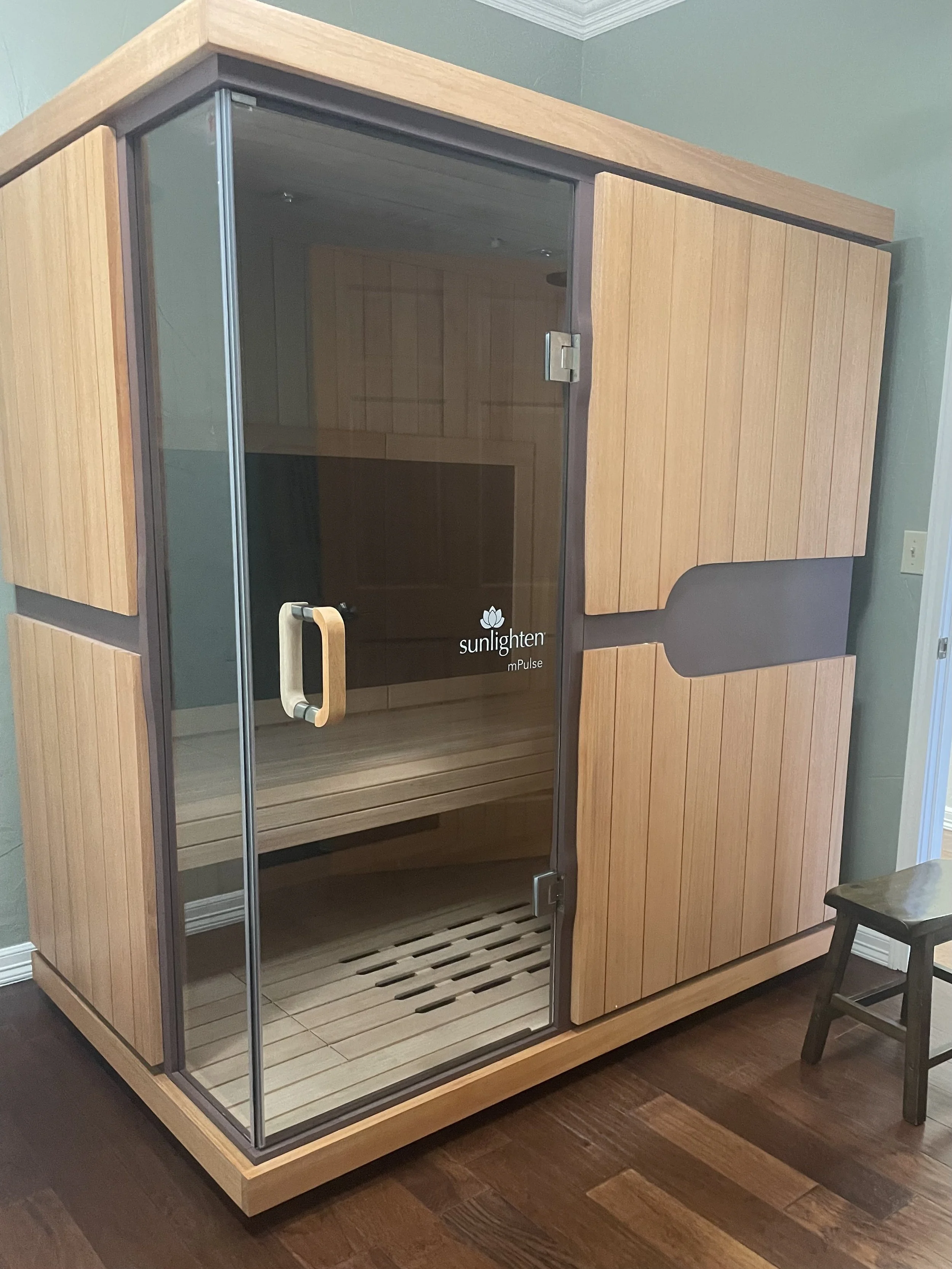
Infrared + Red Light Sauna
How It Supports Recovery, Brain Health, Detoxification, and Long-Term Wellness
At Impact Laser Mobility & Recovery, we use infrared and red-light sauna therapy as a supportive recovery and wellness tool—particularly for people managing chronic pain, inflammation, high training demands, or long-term health goals.
This page explains how our sauna works, what it feels like, and why we integrate it into recovery plans alongside laser and shockwave therapy.
What Is Infrared & Red-Light Sauna Therapy?
Our sauna is the Sunlighten mPulse, a full-spectrum infrared and red-light sauna designed to deliver therapeutic heat and light energy deep into the body.
Unlike traditional hot-air saunas, infrared and red-light saunas:
heat the body from the inside out
operate at lower, more tolerable temperatures
allow longer, calmer sessions
focus on circulatory, cellular, and nervous system support
This makes sauna therapy more accessible for recovery-focused use—not just extreme heat exposure.
What Infrared Heat & Red Light Do in the Body
Infrared heat and red-light exposure support recovery through several complementary mechanisms:
Improved circulation → supports oxygen and nutrient delivery
Reduced inflammation signaling → helps calm irritated tissue
Cellular energy support → red light supports mitochondrial function (ATP)
Muscle relaxation → helps reduce stiffness and tension
Sweat-based detox support → assists one of the body’s natural elimination pathways
Rather than forcing change, sauna therapy supports the body’s own recovery systems.
What the Research Suggests About Sauna Use
Sauna therapy has been studied extensively, particularly in long-term population studies. While sauna use is not a medical treatment or guarantee of outcomes, observational research suggests meaningful associations with long-term health benefits when used consistently as part of a healthy lifestyle.
Longevity & Lifespan
Large, long-term studies following adults over decades have found that frequent sauna use is associated with increased lifespan, with some data suggesting up to several additional years of life expectancy in regular users. These effects are believed to be related to cardiovascular conditioning, circulation, and stress regulation.
Brain Health: Dementia & Alzheimer’s Risk
Regular sauna use has been associated with a significantly reduced risk of dementia and Alzheimer’s disease later in life. Improved cerebral blood flow, reduced inflammation, and nervous system regulation are thought to contribute to these findings.
Detoxification & Heavy Metal Support
Sweating is one of the body’s natural detox pathways. Research suggests that sauna-induced sweating may support elimination of:
heavy metals such as lead, mercury, and cadmium
certain environmental chemicals and pesticides
Infrared sauna therapy promotes deep, sustained sweating at lower temperatures, which many people tolerate better than traditional saunas.
Important note: Detoxification depends on multiple systems (liver, kidneys, gut, hydration). Sauna therapy supports these processes but does not replace medical detoxification or treatment.
Cardiovascular & Circulatory Health
Sauna use has been associated with:
improved vascular function
reduced cardiovascular strain over time
lower risk of cardiovascular events in frequent users
Heat exposure creates a physiological response similar to moderate exercise, increasing heart rate and circulation without joint impact.
Inflammation, Stress & Recovery
Regular sauna use has been linked to:
lower markers of chronic inflammation
improved stress resilience
better sleep quality
enhanced relaxation and nervous system balance
This makes sauna therapy especially valuable as a recovery amplifier for chronic pain, athletic training, and high-stress lifestyles.
When We Use Sauna Therapy at Impact
Sauna therapy is not a cure-all, but it is a powerful supportive tool.
We commonly recommend sauna sessions:
after laser or shockwave treatments to support recovery
during chronic pain or inflammation programs
for muscle soreness and training fatigue
for joint stiffness or reduced mobility
as part of a consistent wellness routine
Sauna therapy helps create a healthier internal environment so other recovery inputs can work more effectively.
Sauna for Acute vs. Chronic Conditions
For Acute or Recent Issues
used gently and selectively
often added after laser therapy
focus is relaxation, circulation, and recovery—not heat stress
For Chronic Conditions
used more consistently
supports inflammation regulation and circulation
frequently paired with laser and shockwave therapy
In chronic cases, sauna therapy supports the adaptation and recovery phase after tissue stimulation.
What Sauna Therapy Is Not
Infrared and red-light sauna therapy is not:
a replacement for medical care
a quick detox cure
extreme heat exposure
a substitute for movement, nutrition, or sleep
It is a supportive wellness and recovery modality.
What Does a Sauna Session Feel Like?
Most clients describe sessions as:
deeply relaxing
warm but not overwhelming
calming to the nervous system
Sessions take place in a private sauna suite with cool, damp towels available to help regulate body temperature and leave you feeling refreshed—not overheated.
Is Infrared & Red-Light Sauna Therapy Safe?
When used appropriately, sauna therapy is considered safe and well-tolerated for most people.
We screen carefully and may modify or avoid sauna use if you have:
certain cardiovascular conditions
uncontrolled blood pressure
heat intolerance
pregnancy (depending on stage and clearance)
How Often Should Sauna Be Used?
Frequency depends on your goals:
Recovery support: 1–2 sessions per week
Impact Staff Sauna Schedule: 3 sessions per week (20 minutes at 160*)
Optimal Results: 4+ sessions/week for the best longevity and brain health results
We help clients determine appropriate frequency based on their overall recovery plan.
Frequently Asked Questions
Is this the same as a traditional sauna?
No. Infrared and red-light saunas use light energy and lower temperatures, making them more recovery-focused and tolerable.
Will I feel drained afterward?
Most people feel relaxed and refreshed. Hydration before and after sessions is important.
Can sauna therapy help with chronic pain?
Many people find sauna therapy helpful for inflammation regulation, muscle relaxation, and overall recovery support when used consistently.
Is sauna therapy a medical treatment?
No. Sauna therapy is a wellness and recovery modality and does not replace medical care.