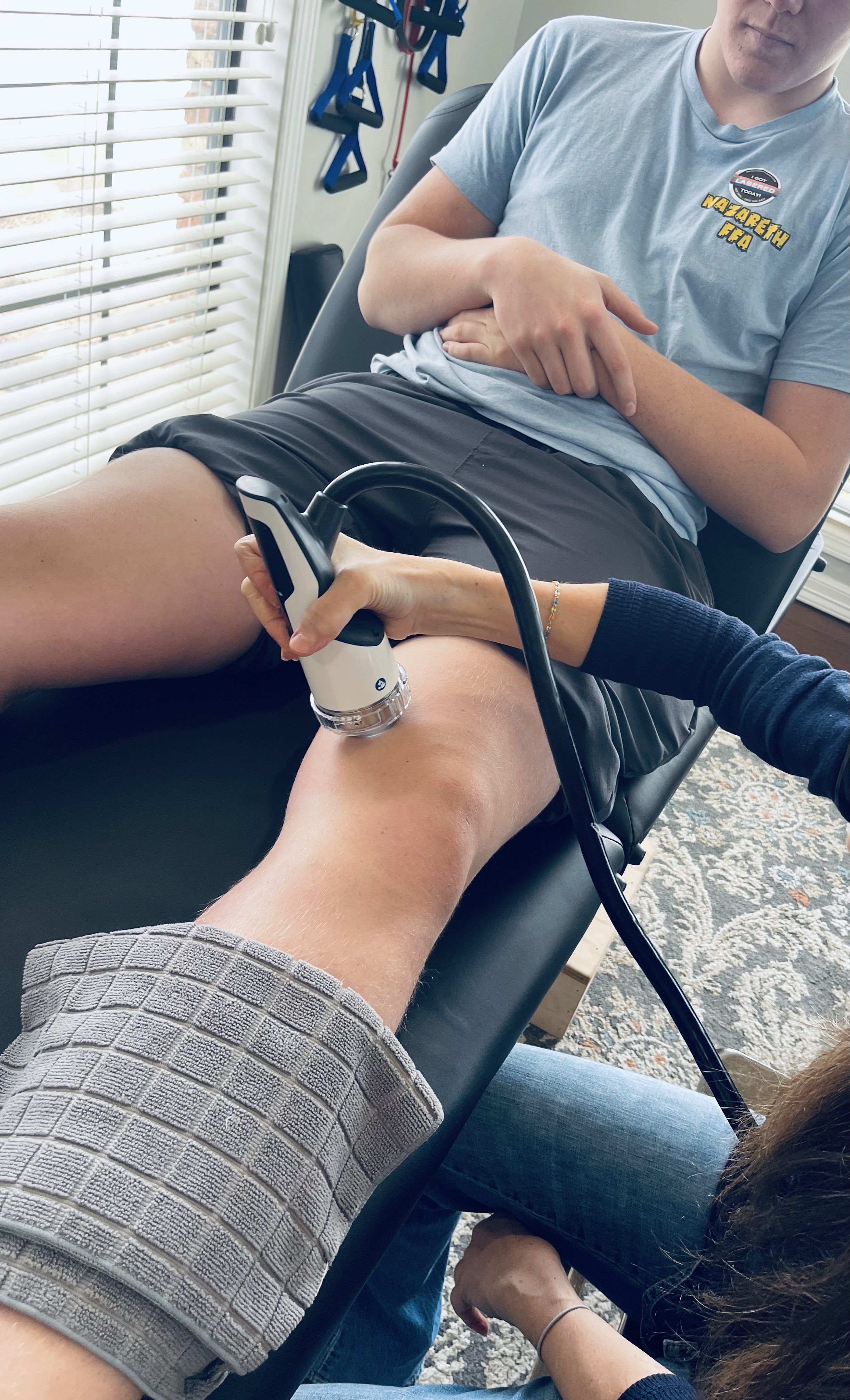
Focused Shockwave Therapy
What It Is, How It Feels, and Why We Use It for Chronic Pain
Focused Shockwave Therapy is one of the primary tools we use at Impact Laser Mobility & Recovery to support recovery from chronic tendon, joint, and soft-tissue pain—especially when symptoms have lingered or keep returning.
This page is designed to answer common questions so you know exactly what to expect and can feel confident about your care.
What Is Focused Shockwave Therapy?
Focused Shockwave Therapy uses acoustic pressure waves (mechanical energy, not electricity) to deliver a targeted stimulus to tissue beneath the skin.
These pressure waves help:
increase local circulation
stimulate cellular activity in stubborn tissue
support tendon and soft-tissue remodeling
reduce pain signaling over time
Shockwave is most often used for chronic conditions, where tissue healing has slowed or stalled.
Focused Shockwave vs. Radial (Pressure) Shockwave — What’s the Difference?
Not all shockwave therapy is the same, and this distinction matters—especially for chronic pain.
There are two main categories used in clinics today:
Radial (Pressure) Shockwave
energy disperses broadly from the surface
primarily affects shallow tissue
often feels more like vibration or tapping
commonly used for general muscle discomfort
Focused Shockwave
energy is delivered to a specific depth and target area
reaches deeper tendon and joint tissue
allows for more precise treatment placement
is commonly used for chronic tendon and joint conditions
At Impact Laser Mobility & Recovery, we use Focused Shockwave Therapy because chronic pain often involves deeper, more stubborn tissue that benefits from targeted stimulation rather than surface-level treatment.
Both approaches have a place in healthcare. We intentionally chose focused shockwave because it aligns best with the conditions we treat and the conservative outcomes we aim to support.
What Shockwave Is Not
Shockwave therapy is sometimes misunderstood. It is not:
ultrasound
electrical stimulation
injections
heat therapy
medication
It is a mechanical stimulus designed to encourage tissue that has adapted poorly to ongoing stress to respond differently.
Why We Use Shockwave for Chronic Pain
Chronic pain often involves tissue that is:
under-perfused (limited circulation)
overloaded over time
slow to regenerate
less responsive to rest alone
Focused shockwave helps by providing a targeted mechanical signal that encourages the body’s natural repair processes to re-engage.
This is why shockwave is commonly used for:
plantar fasciitis
tendon pain (elbow, shoulder, knee, Achilles)
chronic soft-tissue irritation
persistent pain that hasn’t responded to simpler care
What Does Shockwave Therapy Feel Like?
This is one of the most common questions—and it’s important to answer honestly.
Shockwave can feel:
intense
sharp or tapping
uncomfortable at times
However:
sessions are brief
intensity is adjusted to your tolerance
discomfort typically resolves quickly
Most people describe it as very tolerable, especially once they understand why it’s being used and how long it lasts.
We communicate throughout the session and adjust as needed.
How Shockwave Fits Into Our Programs
At Impact, shockwave is rarely used alone for chronic conditions.
We typically pair it with:
Class IV Deep Tissue Laser Therapy to support cellular energy, circulation, and recovery
structured treatment timing rather than random visits
nutrition and recovery guidance to support healing between sessions
This combination helps stimulate tissue while supporting recovery and reducing flare-ups.
Is Shockwave Safe?
When used appropriately and after proper screening, focused shockwave therapy is considered safe and non-invasive.
We review contraindications carefully and will not use shockwave if it is not appropriate for you.
Shockwave may not be appropriate if you have:
a recent fracture
active infection
certain vascular or neurological conditions
specific medical implants in the treatment area
If shockwave is not a good fit, we will discuss other options honestly.
How Many Sessions Are Typically Needed?
For chronic pain, shockwave is most effective when used as part of a series.
That’s why our chronic programs typically include:
6 structured visits
consistent spacing
adjustments based on your response
Chronic tissue usually responds gradually, not instantly.
What Should I Do After a Shockwave Session?
After treatment, we typically recommend:
light activity rather than complete rest
avoiding aggressive loading for a short window
following the simple recovery guidance provided with your program
Temporary soreness can occur and usually resolves quickly.
Frequently Asked Questions
Is shockwave painful?
It can be uncomfortable, but sessions are brief and adjustable. Most clients tolerate it well.
Will I feel better right away?
Some people notice early changes, but chronic recovery is typically progressive.
Is shockwave a last resort?
We view shockwave as a conservative option that many people choose before injections or surgery—not a last resort.
Does shockwave replace surgery or medical care?
No. We provide non-invasive recovery support and do not replace physician-led care.
Why combine shockwave with laser?
Shockwave stimulates tissue mechanically; laser supports cellular recovery. Together, they address chronic pain more comprehensively.